
From first brick to final sale.
Development finance depends on three things: the developer, the scheme and the exit. Talk us through the project and we'll aim to tell you the same working day whether there's a route forward, and what a lender will want to see.
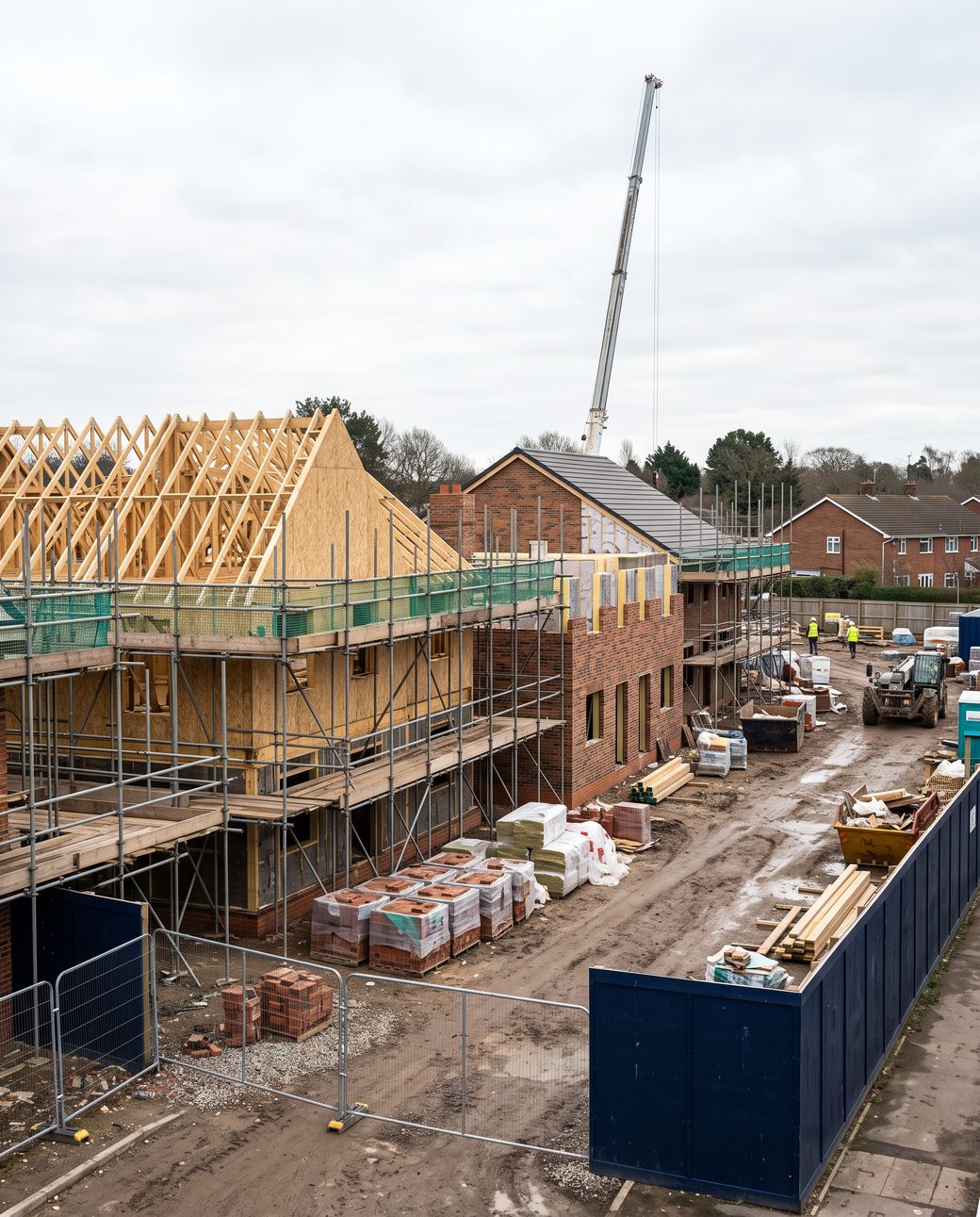
Development finance
Funding to buy the site, pay for the build, or both.
Development lenders look at the whole project, not just the borrower: the site, planning, the build costs, the contractor and the exit. A scheme that's well prepared on paper gets a faster, clearer answer.
We help you put the appraisal, cost schedule and developer's track record in the shape a lender expects, check the scheme against your chosen lender's criteria, and stay with the case through to the last release of funds.
- Ground-up residential schemes
- Conversions, such as commercial to residential
- Permitted development conversions, such as office to residential
- Heavy refurbishment
- First-time and experienced developers
- Small schemes, from a single house to a handful of units
- Stalled or part-built sites that need finance to finish
- Stretched senior, mezzanine or equity funding, where a standard loan won't cover enough of the costs
How it works
Development loans are usually released in stages rather than all at once. The lender typically funds part of the site purchase on day one, then releases the build costs as the works progress. Before each release, a monitoring surveyor visits the site to confirm the work is done. Interest is usually rolled up or retained, so the developer doesn't make monthly payments during the build. The loan is repaid when the units are sold or refinanced.
What lenders look at
- The developer's experience. A track record of similar schemes opens up more lenders and better terms. First-time developers can still be placed, usually with a strong professional team and a fixed-price building contract.
- Planning. Full planning permission in place, or a clear route to it.
- Costs and value. A detailed cost schedule with a contingency, and a realistic gross development value (GDV) for the finished scheme.
- The contractor. Who's building it, their experience and the build programme.
- The exit. How the loan will be repaid, by sale, refinance or both. Lenders favour schemes with more than one exit route.
Development exit
The build is at or near practical completion, but units are unsold and the development loan is due. Development exit finance repays the development lender and gives the developer time to sell or let the units, often at a lower rate than the original development loan.
- The build is finished but units are still unsold as the development loan nears its end date
- Some units are reserved, but sales are slower than the appraisal assumed
- The developer wants to let some units rather than sell them all
Development terms
- GDV (gross development value). What the finished scheme is expected to be worth.
- LTC (loan to cost). The loan as a share of the total land and build costs.
- LTGDV (loan to gross development value). The loan as a share of the finished value. Lenders cap both.
- Monitoring surveyor. An independent surveyor who checks the build on the lender's behalf before each release of funds.
- Practical completion. The point at which the build is finished and signed off. This is usually when development exit finance becomes an option.
- Mezzanine finance. A second loan behind the main development loan, which increases total borrowing at a higher cost.
What we need
The more we have at the start, the faster we can give you an answer.
- The site address and planning details
- The purchase price or site value
- The cost schedule and build programme
- The GDV appraisal, with comparable sales if available
- The developer's track record of past schemes
- The contractor's details
- The exit plan
How we work
You'll have a named contact from your first call, and a named case manager once the case is with us. We check the case against lender criteria before it's submitted, and you can follow every stage on impactPortal.
We get the case right before it goes to a lender, so the underwriter sees a complete submission first time. Some lenders and products are only available through packagers like us.
The client stays yours. We never cross-sell to your client.
We're approved by leading networks and mortgage clubs. Check that yours is listed.
Impact Packaging fee only. Any lender or valuation fees are payable separately. The packaging fee is payable once you agree to proceed with the application.
All packaging fees →
Not sure it's placeable? Ask us.
Call, or email us the key details: the client's circumstances, the property, the loan and the timescale. We aim to come back to you the same working day on whether there's a route forward.
01403 272625 Monday to Friday, 9:00 to 17:30Development lenders on our panel
Fees, procuration and links for each lender.